
Every year, thousands of collectors check the coins worth money chart hoping to find valuable collectibles right in their wallets or change. These charts list dozens of modern coins supposedly worth hundreds or even thousands of dollars. The problem is that most of them are not. Many of these coins on such lists are ordinary pieces boosted by rumors, while really worthy pieces remain ignored. So, now we compare both sides — overrated coins that lost their shine and underrated coins gaining real value.
Overrated Coins — When Popularity Outweighs Rarity
2004-D Wisconsin Quarter “Extra Leaf” (High and Low Leaf)
This coin from the State Quarters series became famous overnight when collectors discovered what looked like an extra leaf on the ear of corn on the reverse. At first, people believed only a handful existed. Prices skyrocketed, with early sales reaching hundreds of dollars.
Later research showed that thousands of examples were made, and the “extra leaf” was likely a simple die gouge, not a special variety. The initial excitement faded as more were found in rolls and mint sets.
Average value: $30–$300 depending on grade.
Worth keeping? Yes, as part of State Quarter history, but not a major rarity.
2022 Maya Angelou Quarter “Drooling George”
When the first coin of the American Women Quarters series was released, a small die chip under Washington’s mouth caused a raised line that looked like drool. Photos spread online within days, and turned the error into a social media trend.
Although collectors rushed to find these “Drooling George” quarters, the defect was common. It was caused by a worn die, not a rare minting flaw.
Typical value: $10–$50, with exceptional uncirculated examples reaching $100+.
Why it’s overrated: The number of pieces with similar chips is high. The visual effect is funny, but not unique.
Tip: Keep one for your error collection, but don’t pay large sums — similar die chips appear in almost every modern release.

1955 Lincoln Cent “Poor Man’s Doubled Die”
This coin’s name causes more confusion than any other. The real 1955 Doubled Die Obverse is one of the most famous U.S. errors ever made, with strong doubling visible across the entire motto and date. The “Poor Man’s” version, however, only shows a faint blur near the date caused by die wear.
Sellers began promoting these weaker examples as “affordable” versions of the real rarity. Millions exist, and they hold little premium over face value.
Market range: $5–$20 even in high grade.
Tip: The genuine 1955 DDO has clear, thick letters and full separation in “LIBERTY”. If the doubling looks flat or faded, it’s just machine doubling.
2019-W Lowell Quarter
The 2019 Lowell quarter marked the first appearance of the “W” mint mark for circulation coins from the West Point Mint. With only two million pieces issued, it created real excitement at first. Collectors hunted rolls, and the market briefly treated it as a true rarity.
Once the numbers stabilized, values settled to realistic levels. These coins remain collectible but not scarce.
Current value: $15–$40 depending on grade.
Tip: Save them if found in change. They are part of modern mint history but no longer investment-grade coins.
Underrated Coins — Quiet Value Hidden in Details
1983-P Washington Quarter Doubled Die Reverse
Among modern quarters, few varieties are as overlooked as the 1983-P Doubled Die Reverse. Doubling appears clearly on “UNITED STATES OF AMERICA” and “E PLURIBUS UNUM,” yet few collectors check this issue carefully.
Because the variety was identified years after its release, most examples were already heavily circulated. Finding one with full mint luster is difficult, which keeps demand high among error specialists.
Average value: $300–$600 for lightly circulated coins, more for certified Mint State pieces.
Why it’s underrated: It hides in plain sight — many collectors simply overlook the reverse design when inspecting 1980s quarters.
1992 Close AM Lincoln Cent
A small design change in 1992 led to one of the most interesting modern rarities. Some business-strike cents were accidentally made with the proof-style reverse, where the letters “A” and “M” in “AMERICA” nearly touch.
Because the difference is barely visible without magnification, this variety went unnoticed for years. Today, it’s one of the top Lincoln cents for sharp-eyed collectors.
Value range: $500–$2,500 depending on grade and color (Red examples bring the highest prices).
Worth keeping? Absolutely. Genuine Close AM cents remain scarce in any condition and continue to rise in value as more collectors learn to recognize them.
Tip: Examine every 1992 cent under side lighting — the spacing between “A” and “M” is the main detail.
2020 “Blind Bat” Quarter (American Samoa)
The 2020 Bat Quarter is already well-known for its memorable design, but one subtle mint error makes it more appealing. On some coins, one eye of the mother bat appears missing due to a small die break. Collectors nicknamed it the “Blind Bat”.
The flaw is easy to overlook and certified examples often sell for more than casual finds.
Value range: $40–$200 depending on how visible the defect is.
Why it’s underrated: It’s overshadowed by the more famous “Leaky Bat” error, even though “Blind Bat” examples are rarer and harder to find in rolls.
1972 Lincoln Cent Doubled Die Obverse
The 1972 Doubled Die Obverse shows clear doubling on “LIBERTY”, “IN GOD WE TRUST”, and the date — strong enough to see without magnification. Despite being clearly visible and easy to identify, it’s often overlooked because most attention goes to the 1955 version.
There are more than ten minor doubled dies for 1972, but only one shows full, bold doubling across the entire design.
Average value: $200–$1,000 depending on grade.
Worth keeping? Yes. It’s one of the clearest doubled dies ever minted, and demand continues to grow among collectors.
Tip: Focus on lettering edges — real doubling appears rounded and raised, while machine doubling looks flat and thin.
Why Coins Become Overrated
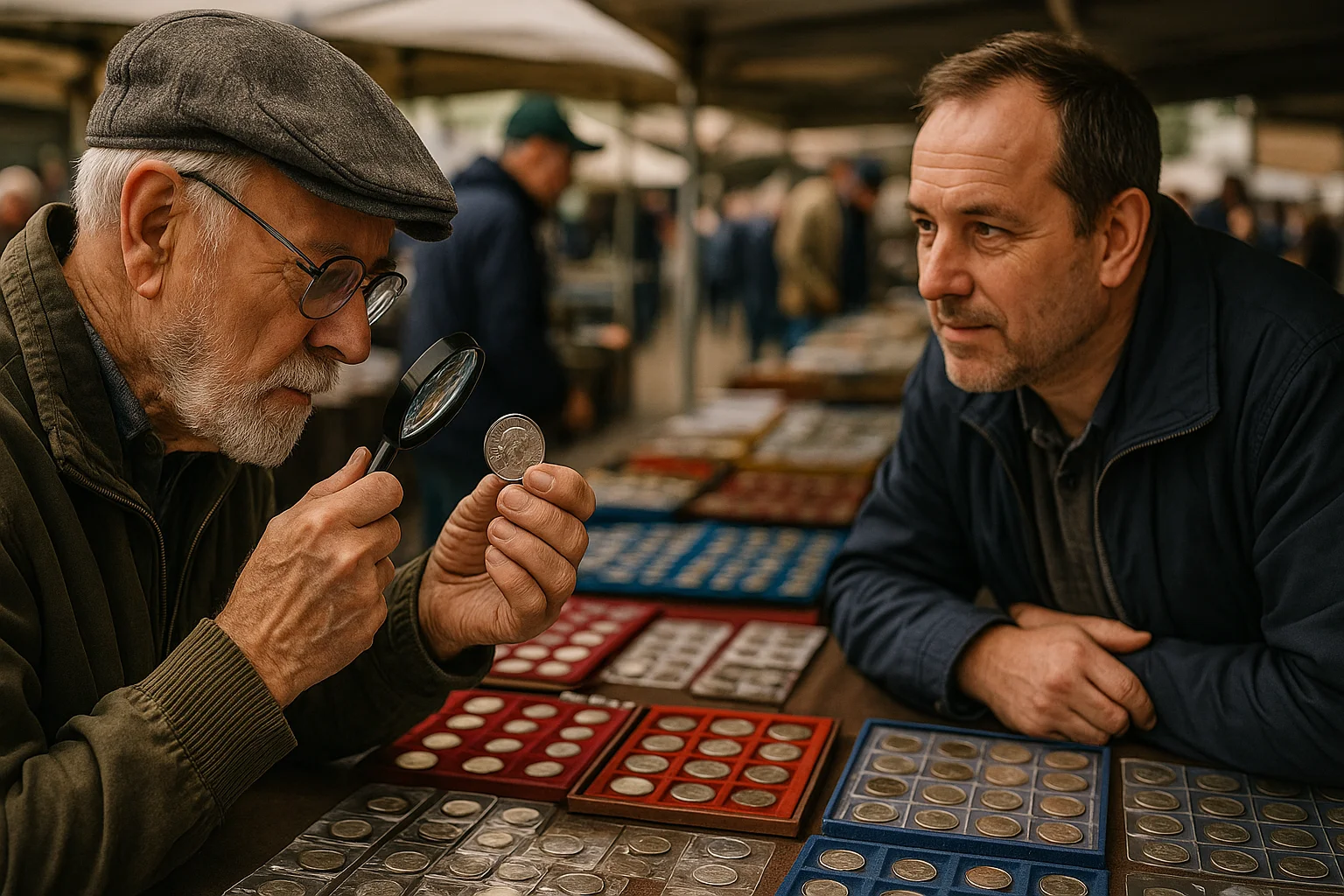
The main reason is visibility. Viral posts, sensational videos, and overuse of the term “rare” make common coins seem valuable. But true rarity depends on measurable facts: mintage numbers, survival rates, and confirmed varieties.
Typical causes of hype:
Early discoveries before full data is known.
Misinterpreted defects that look dramatic.
Confusion between genuine mint errors and post-mint damage.
Collectors who rely only on online lists or “chart values” often overpay for coins that will never appreciate. The true value can be found only through patient research and direct comparison with certified examples.
Modern Tools for Identifying Real Value
Modern collectors use technology to recognize, record, and organize their coins quickly. The Coin ID Scanner app is one of the most practical examples. It works through a simple photo and provides clear, structured information for each coin.
Main features:
Identifies coins automatically by photo.
Shows year, mint mark, metal type, weight, and approximate market value.
Lets you add coins to a personal digital collection.
Keeps all records in one place for easy access.
Offers built-in AI assistant for your questions.
Real Value Comes from Knowledge
Every collector has seen a “rare coin” headline claiming incredible prices for ordinary change. In reality, most of these coins are common, and the real value hides among overlooked errors, minor varieties, or authentic history.
Pay attention to details, study real mint characteristics, and check certified examples to see nuances and truly valuable coins. Trends come and go, but knowledge always stays with you and holds value.