
The 2001 quarter did not introduce a new metal or change the denomination and was made from the standard clad composition used for Washington quarters.
Yet by 2001, the State Quarter Program had shifted from curiosity to national habit. The program was no longer experimental. It was embedded in daily life, retail circulation, classrooms, and collector strategy.
That year marked a transition. Not in composition, but in impact.
Early in the program, collectors often compare releases year by year to track design shifts and mint output trends. Tools such as Coin ID Scanner allow quick side-by-side checks of specifications, mintage details, and market costs to check differences across multiple state issues, making the features of the program easier to see.
Before 2001: The Program Gains Speed
The State Quarter Program began in 1999. Delaware came first. Then, Pennsylvania, New Jersey, Georgia, and Connecticut. Public reaction was strong but cautious. Many people saved the coins because they were new. Few understood how large the program would become.
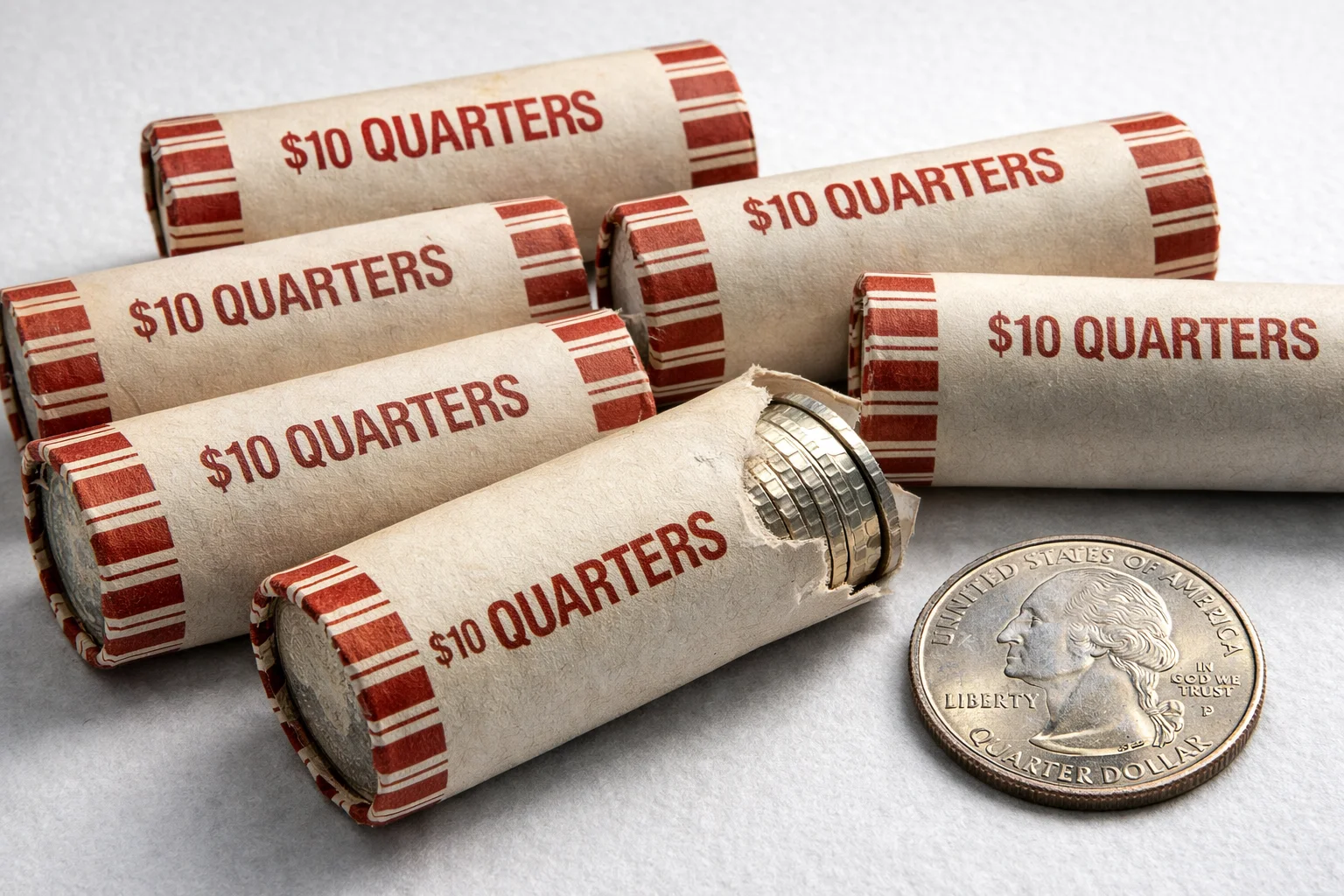
In 2000, five more states followed: Massachusetts, Maryland, South Carolina, New Hampshire, and Virginia. The pace became routine. Banks began receiving regular requests for rolls. Collecting maps appeared in stores. Children placed quarters into color-coded albums.
Interest expanded beyond traditional numismatists. The program reached families, schools, and casual savers.
By the end of 2000, the experiment had proven successful. But 2001 was different. It was not about validation. It was about scale.
The Five 2001 Designs
In 2001, five states were released:
New York
North Carolina
Rhode Island
Vermont
Kentucky
Each design carried strong regional symbolism. Each required technical adaptation by the Mint.
The obverse remained John Flanagan’s Washington portrait. The composition remained 75% copper and 25% nickel over a copper core. Weight stayed at 5.67 grams. Diameter remained 24.3 millimeters.
Nothing changed in the metal. Everything changed in cultural presence.
Public Engagement Reaches Full Strength
By 2001, demand was no longer tentative. It was organized.
Banks reported steady requests for newly released state quarters. Customers asked for specific states. Schools integrated the series into geography lessons. State governments held public ceremonies when their design entered circulation.
This level of coordination did not exist in 1999. It grew steadily, and by 2001 it was normal.
The Mint produced hundreds of millions of coins per state. Circulation was broad. Distribution was fast. These coins reached the public immediately.
The program had moved from novelty to expectation.
How States Chose Their Designs
Each state followed a structured process. It was organized and public.
The typical path included:
Creation of a state commission
Collection of public theme ideas
Review by historians and advisors
Public voting or internal narrowing of options
Governor approval
The final technical review by the U.S. Mint
After the state approved a concept, the U.S. Mint evaluated it from a production standpoint. Line thickness could be increased. Overly fine details were simplified. Relief depth was adjusted to ensure proper striking at high volume.
Very thin lines would fade quickly. Excess relief could cause weak strikes. Designs had to work under real production pressure.
The final coin was not just artwork. It was the result of public input and technical adaptation.
That process increased public attachment. Residents felt involved. The design belonged to the state, not just the Mint.
Design Complexity Increases
Some 2001 reverse designs introduced fine linear details and open fields that could be sensitive to die wear and contact marks.
New York
The New York quarter featured the Statue of Liberty and the Manhattan skyline. The skyline introduced multiple thin horizontal and vertical elements. These fine lines required sharp dies and strong strike pressure. As dies aged, the detail softened.
The open water area below the skyline created smooth fields that revealed contact marks easily. High-grade preservation required both sharp skyline lines and clean surfaces.
North Carolina
North Carolina honored the Wright brothers. The airplane design included a delicate wing structure. Thin lines demanded precise strike quality. Weak strikes blurred detail quickly.
The background sky formed a broad open area. This made small abrasions visible under light.
Rhode Island
Rhode Island displayed a sailboat on open water. The reverse included one of the largest smooth field regions among the 2001 issues. That wide open water surface showed even minor contact clearly.
Strike detail was usually strong. Surface preservation was more challenging.
Vermont
Vermont presented a maple tree and a sap bucket. The tree’s textured leaves covered much of the reverse. Texture helped diffuse minor ticks. High relief leaf edges could show contact, but the design masked slight disturbances better than Rhode Island.
This design often appears balanced in upper Mint State.
Kentucky
Kentucky featured a racehorse and Federal Hill. The horse head contained moderate relief. The sky behind it created another smooth field. Contact marks often appear there first.
Strike quality was generally consistent. Surface condition remained the key grading factor.
Production Pressure and Die Wear
High planned mintage volumes placed sustained production demands on working dies.
Philadelphia and Denver struck large volumes, so dies experienced fatigue. Fine elements softened with extended use. Skyline lines, wing details, and inscription edges could weaken late in the die life.
High output did not reduce quality overall. But variation increased.
In earlier program years, collectors focused on acquiring one example per state. By 2001, some began seeking better-struck pieces. Awareness of the die states grew slowly.
The idea that not all coins of the same year are equal became clearer.
Market Behavior Changes
In 1999, most people collected from pocket change. Condition rarely mattered.
By 2001, collectors began to search for uncirculated rolls. Some set aside original bank-wrapped rolls. Others examined coins for luster quality and minimal marks.
Mint State grading entered mainstream conversation.
Coins in MS63 to MS65 were common. Premiums were modest. But the idea that MS67 or MS68 examples could carry higher value began to circulate.
The market did not change overnight. It shifted gradually. The foundation was formed around 2001.
Condition Awareness Expands
As the program matured, collectors stopped focusing only on completion. By 2001, a new question appeared: not just “Do I have this state?” but “What condition is it in?”
Modern clad coins are vulnerable. Production methods and bulk storage create predictable surface issues:
Bag friction leaves fine ticks
Rolling equipment adds contact
Open fields show abrasions quickly
High mintage did not guarantee flawless examples. In fact, the opposite became clear. The more coins were produced, the more surface contact occurred.
Design complexity amplified the effect. Skyline lines on New York softened late in die life. Wide fields on Rhode Island exposed even small disturbances. Textured areas, such as Vermont’s maple leaves, sometimes mask minor flaws.
By 2001, collectors began to understand that survival quality mattered. That awareness changed behavior. Some searched rolls. Others compared strike sharpness. The conversation shifted from quantity to preservation.
This change did not happen in isolation. It grew alongside something larger.
A Cultural Phenomenon Takes Shape
The State Quarter Program was no longer a release schedule. It had become a routine participation.
In 2001, public involvement looked like this:
children filling color-coded state maps
families setting aside coins from daily change
media covering each state ceremony
local pride tied to reverse designs
The novelty of the first year had faded. The habit remained.
The quarter connected geography, identity, and money. It turned everyday transactions into small cultural moments. That connection kept participation steady several years into the series.
As interest broadened, collecting began to split into different paths.
Registry Growth and the High-Grade Track
While families filled albums, a smaller group moved deeper.
Certification services gained visibility. Collectors began submitting selected coins for grading. Registry competition added structure.
By 2001, a parallel market had formed:
Casual collectors focused on completion
Advanced collectors pursued MS67 and MS68
Grading reports began influencing perception
Strike quality and luster entered discussions
Survival differences between states were compared. Surface preservation became central.
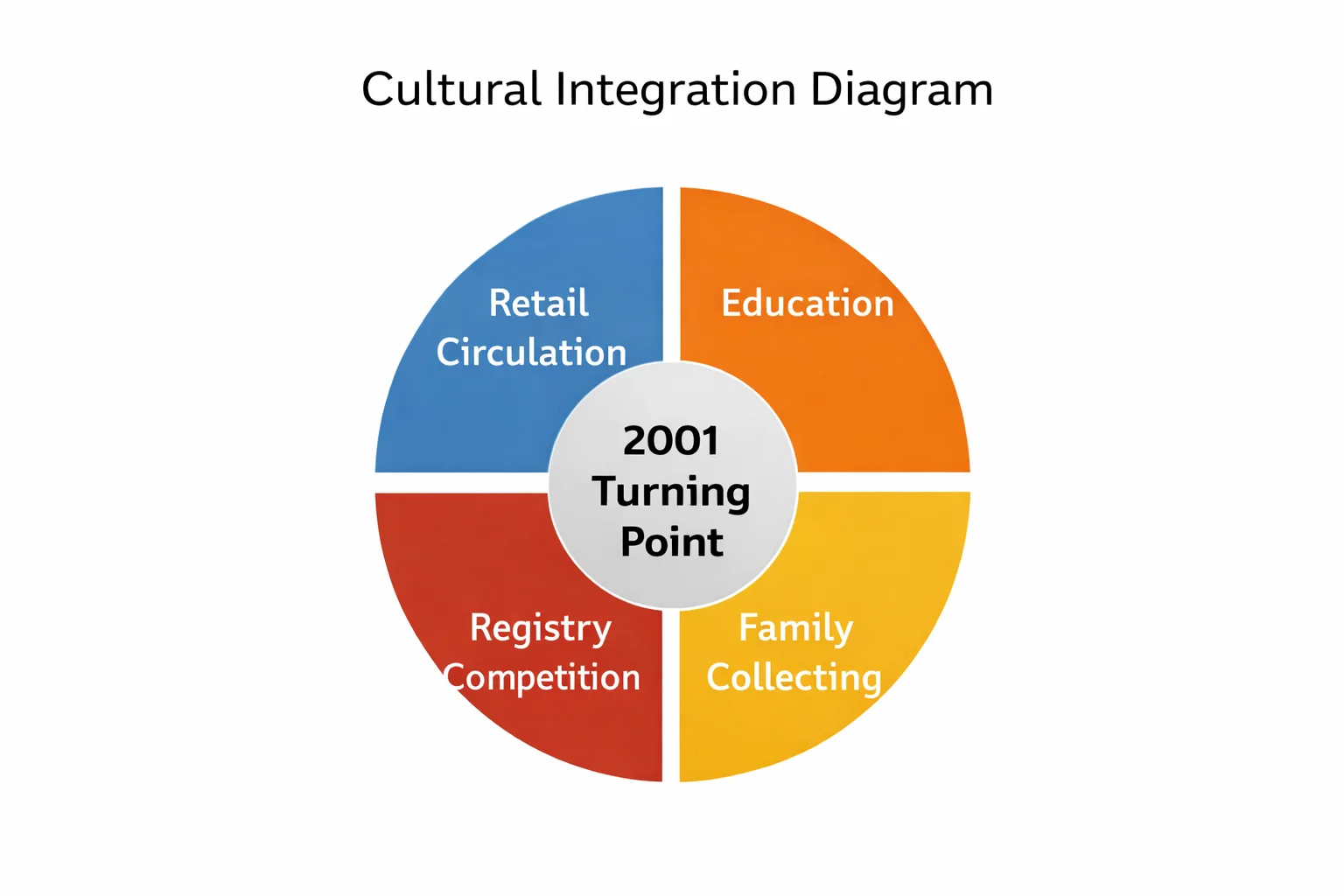
The program now operated on two levels at once. One was cultural and accessible. The other was analytical and grade-driven. Both grew from the same foundation.
This dual structure helped sustain long-term interest.
Economic Environment and Accessibility
The early 2000s provided a stable setting for mass participation.
The denomination mattered. A quarter was affordable. Anyone could join. Entry cost was minimal. There was no barrier to starting.
Collecting fits easily into household routines. Rolls could be ordered from banks. Coins could be saved from change.
By 2001, saving state quarters felt normal. It was not viewed as a specialized hobby. It was a common activity.
That normalization expanded the base of future collectors.
Educational Impact and Generational Entry
The cultural effect extended into schools.
Teachers used the coins to explain:
State order of admission
Capitals and geography
Historical themes
Students learned through objects they handled daily. Geography became tangible.
Many children who filled maps in 2001 later returned to collecting as adults. The exposure was informal but lasting.
This generational effect matters. It shows that the turning point was not just about mintage or strike quality. It was about integration into everyday life.
The Broader Influence
By 2001, the Mint had evidence that a circulating commemorative program could maintain engagement over multiple years.
Later programs followed similar principles:
Rotating themes
Identity-based designs
Broad public participation
The lesson was clear: representation sustains attention. 2001 did not launch that idea. It confirmed it.
Why 2001 Marks the Turning Point
Several elements align in 2001:
The program had proven stable.
Public demand was sustained.
Design complexity increased.
Production volume remained high.
Condition awareness grew.
Cultural integration peaked.
Earlier years established the concept. Later years extended it.
2001 represents the midpoint where the program shifted from the launch phase to a mature phenomenon.
It was no longer a novelty. It was a routine national engagement.
Long-Term Perspective
Two decades later, most 2001 quarters remain worth face value in circulation. That fact does not reduce their historical importance.
The year demonstrated that circulating commemoratives could maintain public interest beyond initial excitement.
It also showed that design structure influences high-grade survival, even in modern clad coinage.
Collectors analyzing the series today often notice subtle differences in strike sharpness, die wear, and field sensitivity among the 2001 issues. That analytical approach traces back to the awareness that emerged during this period.
Final Thoughts
The 2001 quarter did not introduce silver. It did not reduce mintage dramatically. It did not create a rare key date.
Its importance lies elsewhere.
By 2001, the State Quarter Program had moved beyond introduction and into cultural permanence. Public participation was high. Design selection involved entire states. Condition sensitivity began influencing collector behavior.
From that year forward, the program was not testing public interest. It was shaping modern American coin collecting.